
Culture, Galas & People
Global Health Congress brings health, tech and investment leaders to New York's Yale Club
The nonprofit Global Health Forum's three-day meeting ended with Shark Tank-style startup finals, and organizers are already planning a bigger 2027 edition.
By Rishabh Singh · Contributor
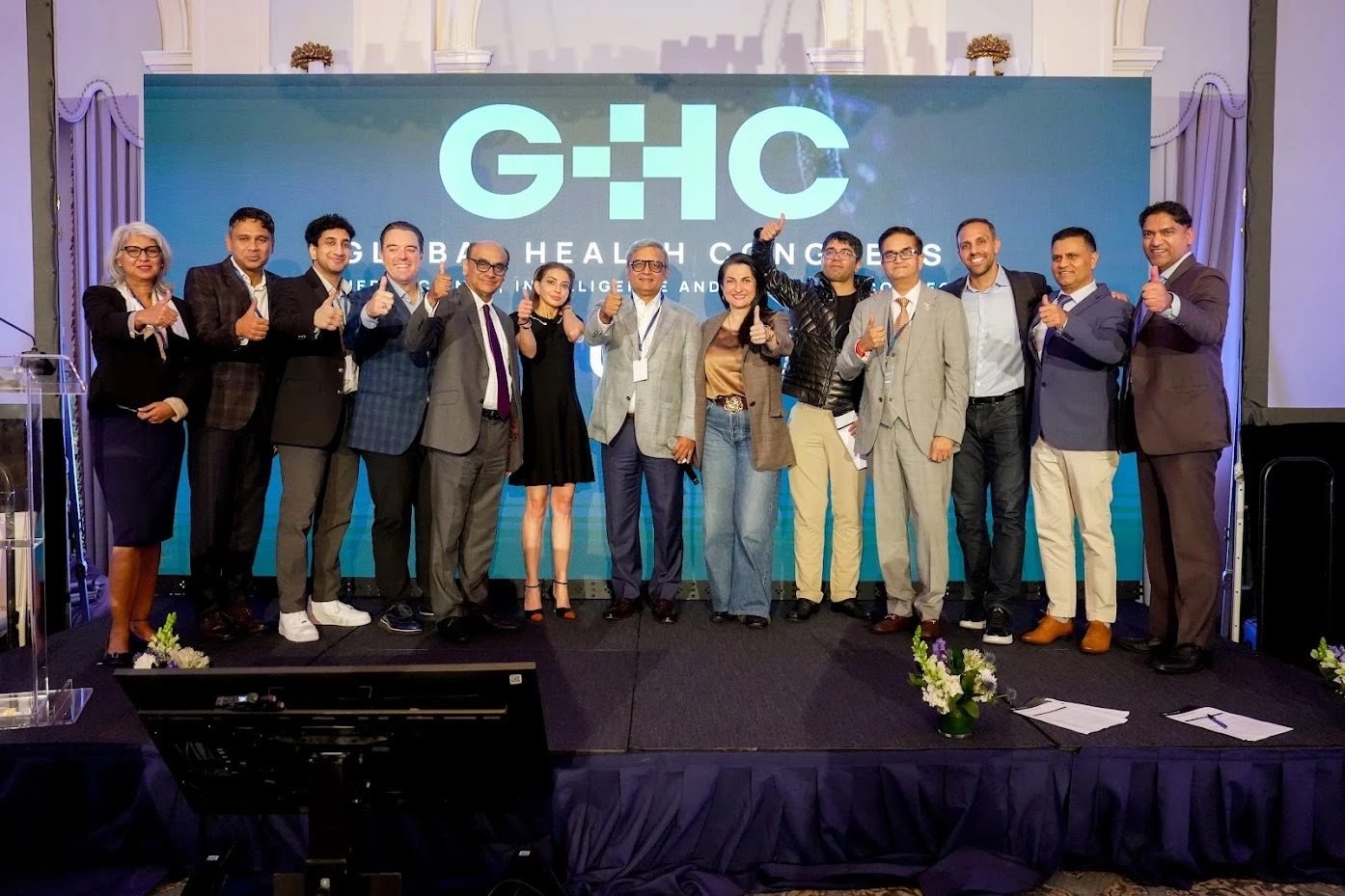
For three days in October, one room at the Yale Club in Manhattan held surgeons, bank chiefs, cloud executives, a state commerce secretary and venture investors at the same time. That was the design of the Global Health Congress 2026, which ran from October 9 to 11 a short walk from Grand Central.
The congress is the work of Global Health Forum, a New York group that describes itself as a 501(c)(3) nonprofit. It was founded by Dr. Achintya Moulick, who chairs it, with Sanat Chattopadhyay, a pharmaceutical manufacturing executive. Moulick, a cardiothoracic surgeon, has led CarePoint Health in New Jersey as president and CEO, and in 2024 he chaired the AAPI World Health Congress in New York. He and Chattopadhyay sit on the forum's board of trustees with Dr. Samin Sharma. The forum held its first congress at the same club in November 2025, so this year's meeting was its second.
One room, no expo hall
The format is what sets the congress apart. Organizers capped attendance at 500 seats in what the website calls "one room," left out the expo hall that fills most medical meetings, and carried CME accreditation for clinicians. The aim was to seat health-system executives, technology leaders, investors and policymakers side by side for two days of keynotes and panels, then close with a startup competition run in the style of Shark Tank.
The program opened on Friday, October 9, with a VIP dinner titled "Reflections on Human Wellbeing." Saturday and Sunday were built around six themes: cellular and molecular medicine, clinical AI, prevention, global health and equity, systems and policy, and capital and innovation. The organizers' case, as stated on the site, is that "the breakthroughs ahead live in the connections between disciplines, not within them."
Bankers, technologists and a Shark
The organizers listed more than 100 speakers. The best known to a television audience was Robert Herjavec, the entrepreneur and longtime Shark Tank investor. Finance came from C.S. Venkatakrishnan, group CEO of Barclays. Technology came from Dr. David Rhew, global chief medical officer and vice president of health and life sciences at Microsoft, Shashank Samant, executive chairman of Hitachi Americas, and Gajen Kandiah, CEO of Rackspace Technology.
Deborah Moorad, Oklahoma's secretary of commerce, brought a state government view. Marina Kusserow, an operating partner at Andreessen Horowitz, brought a venture investor's, and Dr. Annu Navani, founder and chief medical officer of Reve Health Institute, a clinician's.
A pitch competition judged by executives
Several of those headliners also sat in judgment. The weekend's Venture Forum ended in Shark Tank-style finals over two days. Saturday's judges were Herjavec, Moorad, Kandiah, Kusserow and Samant. Sunday's panel was Sava Kobilarov, Anshul Debuka, Kamal Singh and Anmol Goel.
The organizers listed 12 finalists on the congress website, each with a product already in customers' hands, but as of publication they had not announced the winners or any investment commitments that came out of the competition. Global Health Forum has also announced a strategic partnership with Techno India Group, though it has not published the terms.
What it means for nonprofit conveners
A capped audience, a single room and a pitch competition judged by CEOs and investors make the congress look more like an investor summit than a traditional medical meeting. In our view, a charity-run event that doubles as a deal room should report what happened in that room. Publishing the winners, the money committed and the event's sponsors would let attendees, donors and the public judge whether the format delivers for patients.
What's next
Moulick's forum is already looking ahead. In a message posted on its website after the event, the organizers thanked attendees "for making it the most loved health conference across 50 states" and said, "We have started planning a bigger GHC 2027." Dates and a venue for next year have not been announced.
General information for donors and nonprofit leaders, not legal or tax advice. How we report is set out in our editorial guide.


